Blenheim Road
The Girl on the TrainBlenheim Road is the railway-side street where Rachel Watson’s former home and Megan Hipwell’s home lie within sight of the train she takes between Ashbury and London. To Rachel, it is at once a route past other people’s domestic lives and the address of a home she has lost; after Megan disappears, those ordinary views acquire the weight of possible evidence. The street’s significance grows from this overlap between physical proximity and Rachel’s uncertain knowledge of what she has seen.
Setting and railway view
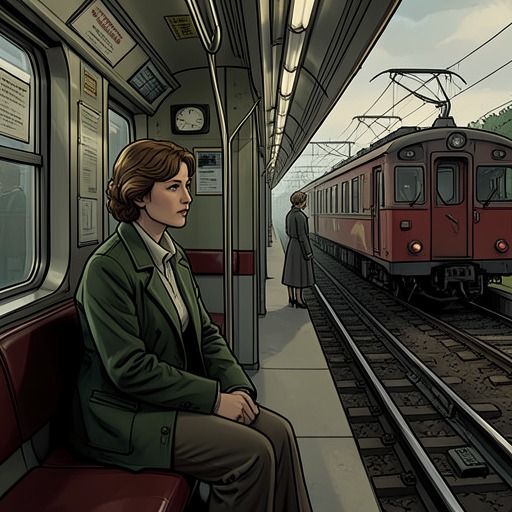
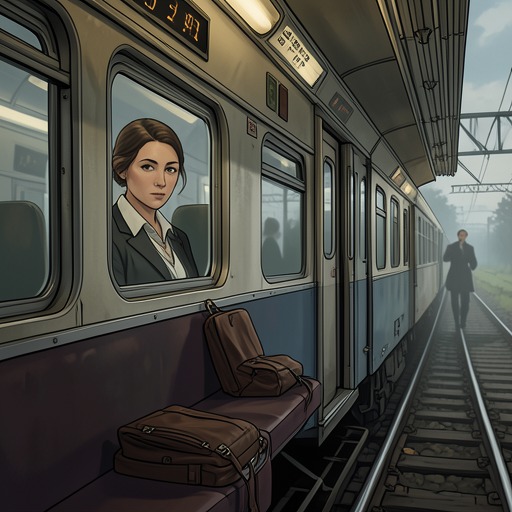
Blenheim Road is visible from the train as it passes the houses. At a signal, the train slows enough for Rachel to watch a woman on a patio in front of French doors, barefoot in a bright print dress and looking back toward the house. Rachel fixes her attention on that small domestic scene as the train begins moving again, trying not to look toward the houses farther along the street. The railway makes the view both intimate and fleeting: the houses appear close enough to observe, but the train carries Rachel past before she can know what is happening inside them.
The route also fixes the street within Rachel’s daily geography. Her train leaves Ashbury, passes through Witney station, and continues toward Euston; Blenheim Road is part of the landscape repeatedly presented to her from the carriage window. That repetition turns looking into a routine she both resists and renews. The street is not simply a place she visits: it reaches her as a recurring view, with the train acting as a moving frame through which she sees fragments of lives she cannot enter.
Rachel’s former home
At 23 Blenheim Road, Rachel lived for five years in a Victorian semi that she part-owned. She regards it as her first real home, distinct from her parents’ house and the student flatshares that came before it. Her memory of those years holds happiness and misery together: the same address signifies a domestic life once hers and a loss she remains unable to look at without pain.
That pain is attached to specific changes she has watched from the train. Rachel remembers the upstairs bedroom’s cream linen blind being replaced by a soft pink one, and Anna watering the rose bushes by the fence while visibly pregnant. The details mark the house as occupied and transformed after Rachel’s departure. She tells herself not to look, closes her eyes and counts, and yet keeps looking on successive journeys. The street makes the past visible in altered form, while offering no way to recover the home Rachel remembers.
Rachel’s present circumstances sharpen the contrast. In Ashbury she is a lodger in Cathy’s duplex, rather than a homeowner or even a tenant; she describes the Victorian house on the tracks as her home despite no longer living there. Blenheim Road therefore represents not just a former address but a lost sense of ownership and control. The contrast is concrete: a house she part-owned stands against a small second bedroom in someone else’s home.
Megan’s disappearance and Rachel’s sighting
Blenheim Road is also the address given in the police appeal for Megan, described as a twenty-nine-year-old woman last seen by her husband, Scott Hipwell, on Saturday evening after leaving home to visit a friend. The appeal calls her disappearance out of character and identifies her clothing as jeans and a red T-shirt. Rachel encounters the report while looking online in a library; recognition of the street name turns the woman she has imagined from the train into a missing person she knows by name. She leaves the library in alarm.
Rachel later tells Scott that, from the train on the Friday before Megan disappeared, she saw Megan on his lawn with someone who was not him. This is a specific claim about what Rachel observed, not an identification of the other person. Its importance lies in the gap between a brief view from the railway and the certainty Scott wants from her. Blenheim Road supplies the scene of the sighting, but the passing train’s limited perspective leaves Rachel unable to establish more than what she says she saw.
The street remains charged after Scott is arrested. Rachel returns to his house and finds its curtains drawn, while a neighbour’s curtains twitch. She hesitates at the doorway, unsure whether to knock or leave; before she can decide, the door opens and Scott pulls her inside. In this moment, the familiar route past the house gives way to direct physical danger. The setting links her long habit of watching from a distance to a confrontation she did not intend to enter.
The street as memory and narrative frame
The railway and Blenheim Road organize Rachel’s account through recurrence rather than secure understanding. The train repeatedly presents the same domestic scenery, but Rachel’s memories alter what it means to look: the roses and pink blind recall her former marriage and home, while the view of Megan becomes entangled with the question of what happened before the disappearance. A glimpse can become consequential without becoming conclusive.
The underpass at the corner of Blenheim Road further connects place to the limits of memory. After deliberately returning to its entrance, Rachel recalls seeing Anna in a blue dress get into Tom Watson’s red car on the night Megan disappeared. She immediately doubts the memory because it conflicts with what she had been told: Tom had come looking for her, while Anna was said to be at home. The recollection does not resolve the night; it exposes a contradiction Rachel cannot yet explain. In this way, Blenheim Road and its adjoining railway spaces function as more than a backdrop. They are the repeated points from which the novel makes observation, loss, and unreliable recollection converge.